
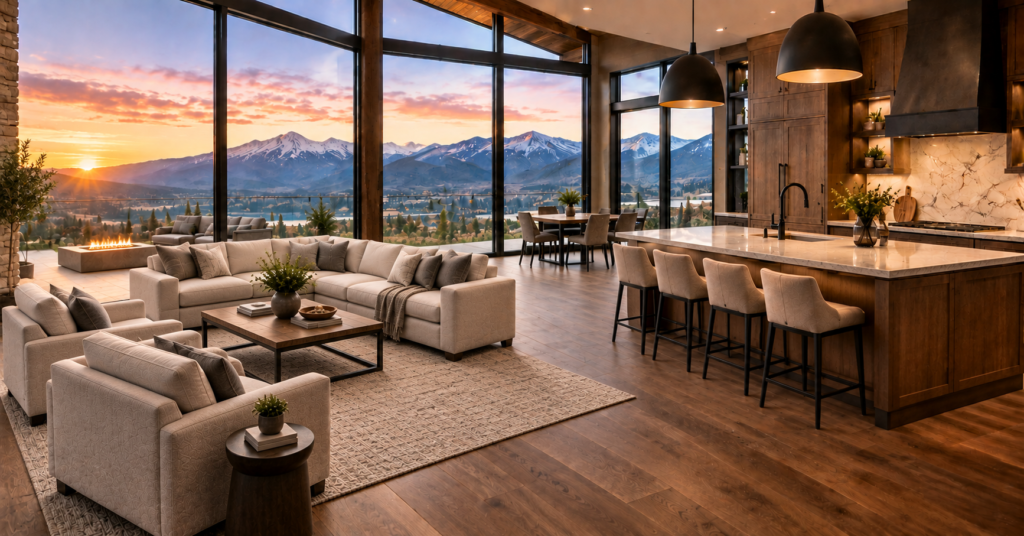
Custom Home Features Worth Investing In: Where to Spend More and Where You Can Save
Building a custom home comes with an exciting amount of freedom.
You get to choose the layout, materials, finishes, windows, storage, lighting, appliances, outdoor spaces, and countless other details that will ultimately make the home yours.
But that freedom also creates one of the biggest challenges of custom home building:
Where should you spend your money?
Even with a generous construction budget, very few homeowners have an unlimited one. Every upgrade has a cost, and deciding where to invest—and where to save—can have a major impact on both your finished home and your overall budget.
The key is understanding the difference between features that are relatively easy to change later and decisions that become expensive, disruptive, or nearly impossible to modify once construction is complete.
At Johnson Revolution Construction, we believe a great custom home starts with thoughtful planning and quality construction from the ground up.
Here are some of the areas worth prioritizing when deciding where your custom home budget should go.
1. Invest in the Structure First
The most exciting parts of a custom home are usually the things you can see.
The framing isn’t one of them.
Once construction is complete, most of the home’s structural components will disappear behind drywall, flooring, roofing, and finishes. But those hidden components are responsible for supporting everything else.
Quality framing affects:
- Structural integrity
- Wall alignment
- Floor performance
- Roof systems
- Door and window installation
- Cabinetry
- Drywall
- Finish carpentry
- Long-term durability
A beautiful kitchen can eventually be remodeled.
Your home’s fundamental structure is considerably more difficult to change.
That’s why structural quality should be one of the first places you invest—not one of the places you look for shortcuts.
2. Prioritize the Floor Plan Over Cosmetic Upgrades
One of the biggest advantages of building a custom home is having control over how the home actually functions.
Before worrying about premium countertops or expensive fixtures, make sure the layout works for the way you live.
Consider:
- How people move through the home
- Where your family naturally gathers
- Kitchen placement
- Bedroom privacy
- Laundry location
- Mudroom access
- Pantry size
- Garage access
- Storage
- Indoor-outdoor connections
Changing a countertop several years from now is relatively straightforward.
Moving a kitchen, staircase, bathroom, or structural wall is not.
Investing time and resources into getting the floor plan right can provide far more long-term value than many cosmetic upgrades.
3. Good Windows Can Be Worth the Investment
Windows influence far more than the appearance of your home.
They affect natural light, views, comfort, energy performance, ventilation, and the overall character of a space.
Window placement is particularly important in custom construction because you aren’t limited to predetermined openings.
If your property has an incredible mountain, valley, forest, or landscape view, thoughtful window placement can make that view part of the architecture.
Consider both the quality and placement of your windows.
Larger windows may be worth the investment in important living spaces, while more economical options may make sense in rooms where the view and natural light are less significant.
4. Spend Money on the Things Behind the Walls
Some of the smartest custom-home investments are the least exciting to photograph.
Insulation, air sealing, waterproofing, electrical capacity, plumbing infrastructure, drainage, and other building systems influence how your home performs every single day.
Investing in these systems can contribute to:
- Greater comfort
- Better temperature consistency
- Lower energy consumption
- Reduced moisture problems
- Improved durability
- Easier future upgrades
These are also systems that become much more difficult to access once drywall and finishes are installed.
If you have to choose between an expensive decorative feature and improving something fundamental to the home’s long-term performance, the hidden upgrade may ultimately provide more value.
5. Invest in the Kitchen Layout Before the Kitchen Finishes
For many families, the kitchen is the center of the home.
It makes sense to invest there—but spend strategically.
A functional kitchen layout often provides more value than selecting the most expensive finish available.
Consider:
- Work surfaces
- Appliance placement
- Island size
- Pantry access
- Storage
- Traffic flow
- Seating
- Connection to dining and living areas
You can replace cabinet hardware, lighting, or even countertops later.
Changing the entire kitchen footprint is much more complicated.
Build the right kitchen first. Upgrade the cosmetics as your budget allows.
6. Don’t Underestimate Storage
Storage rarely gets the same attention as kitchens and bathrooms during the design phase, but insufficient storage can affect how your home functions every day.
Custom construction gives you an opportunity to intentionally create places for the things your family owns.
That might include:
- Walk-in pantry space
- Mudroom storage
- Linen closets
- Garage storage
- Seasonal storage
- Sports equipment
- Outdoor gear
- Hobby equipment
- Cleaning supplies
- Oversized bedroom closets
Strategically adding storage during the planning phase can be far less expensive than trying to create it after the house is complete.
7. Consider Outdoor Living Early
If decks, patios, covered entertaining spaces, an outdoor kitchen, or other exterior features are part of your long-term vision, discuss them during the original planning process—even if you aren’t building everything immediately.
Planning ahead may allow structural supports, electrical service, gas lines, plumbing, door locations, and other elements to be incorporated during construction.
That can make future additions significantly easier.
Your custom home doesn’t end at the exterior walls.
Think about how the house and property will work together.
8. Plan Electrical and Technology for Tomorrow
Think about how dramatically technology has changed within the last 20 years.
Now consider how long you intend to own your custom home.
Electrical planning should account for more than your immediate needs.
Depending on your lifestyle, consider planning for:
- Electric vehicles
- Additional garage power
- Home offices
- Security systems
- Exterior cameras
- Home automation
- Entertainment systems
- Outdoor living areas
- Workshops
- Backup power
- Future technology
Adding infrastructure while walls are open is generally easier than retrofitting it later.
9. Know Where You Can Save
Not every part of your custom home needs to be the most expensive option available.
Several cosmetic elements can often be upgraded relatively easily later.
Depending on your priorities, you may choose to save initially on things such as:
- Decorative light fixtures
- Cabinet hardware
- Certain appliances
- Paint colors
- Some flooring selections
- Decorative wall treatments
- Furniture
- Landscaping phases
The goal isn’t to choose cheap products.
It’s to distinguish between permanent construction decisions and replaceable design decisions.
If something can be changed in a weekend several years from now, it may not deserve the same budget priority as something embedded in the structure of your home.
10. Spend According to Your Lifestyle
There’s no universal list of custom-home upgrades that everyone needs.
That’s the point of building custom.
If you love cooking, invest more in the kitchen.
If your family spends every summer outside, prioritize outdoor living.
If you own recreational equipment, build the garage and storage you actually need.
If you work from home, create an office you’ll enjoy using every day.
If you’re building around an extraordinary view, prioritize windows and orientation.
Your budget should reflect your life—not someone else’s list of luxury-home trends.
Think Long-Term When Making Custom Home Decisions
When you’re choosing between upgrades, ask yourself three questions:
How difficult would this be to change later?
How often will we actually use it?
Will it improve the way the home performs or the way we live?
Those questions can quickly separate meaningful investments from upgrades that simply sound exciting during the selection process.
Build the Important Things Right the First Time
A custom home should be personal, but it should also be built intelligently.
At Johnson Revolution Construction, our approach to custom homes emphasizes thoughtful planning, practical layouts, structural quality, and craftsmanship throughout the building process.
We believe the best custom homes aren’t necessarily the ones with the most expensive features.
They’re the homes where the right investments were made in the right places.
Spend where it matters.
Save where it makes sense.
And build the things that are difficult to change correctly from the very beginning.
Ready to Start Planning Your Custom Home?
If you’re considering building a custom home, Johnson Revolution Construction can help you evaluate your ideas, priorities, structural needs, and budget before construction begins.
The earlier you start planning, the more opportunities you have to make decisions that create lasting value.