
Designing a Custom Home Around Your Lifestyle: 8 Decisions to Make Before You Build
Building a custom home gives you an opportunity that buying an existing home simply can’t: the ability to create a space around the way you actually live.
It’s easy to get caught up in countertops, flooring, paint colors, and finishes when imagining your future home. But some of the most important custom home decisions happen long before you choose any of those details.
Where does your family naturally gather? What happens when everyone walks through the door at the end of the day? Do you entertain frequently? Work from home? Need room for hobbies? Want to enjoy a particular view from the kitchen every morning?
At Johnson Revolution Construction, we believe a truly custom home should be more than beautiful. It should feel intentional, functional, and uniquely suited to the people who live there.
Before finalizing your custom home plans, here are eight decisions worth considering.
1. Think About How You Live Before Deciding How the House Should Look
Start with your everyday routine.
Think through a typical weekday from the moment you wake up until you go to bed. Then consider weekends, holidays, entertaining, and the different ways your home will be used throughout the year.
Ask yourself questions like:
- Where does everyone enter the home?
- Where do shoes, coats, backpacks, and work gear go?
- Does your family eat together regularly?
- Do you entertain large groups?
- Does someone work from home?
- Do you need dedicated space for hobbies?
- Where does clutter typically accumulate?
- Do you spend significant time outdoors?
These answers can reveal far more about the ideal floor plan than simply looking through photos of beautiful homes.
A custom home should solve everyday problems—not create new ones.
2. Decide Where Your Family Will Naturally Gather
Most homes have one or two spaces where people naturally congregate.
For many families, that’s the kitchen.
If entertaining is important to you, an oversized island, open kitchen, walk-in pantry, and easy connection to the dining and living areas might make sense.
Other homeowners may prioritize a large great room, game room, outdoor entertaining area, or covered patio.
Instead of simply asking, “How big should the living room be?” ask:
“How do we want to use this space?”
That subtle change in perspective can lead to a much better design.
3. Plan Storage Earlier Than You Think You Need To
Storage may not be the most exciting part of designing a custom home, but you’ll appreciate good storage every single day after moving in.
Consider dedicated space for:
- Seasonal decorations
- Sports equipment
- Outdoor gear
- Cleaning supplies
- Food storage
- Linens
- Tools
- Children’s belongings
- Luggage
- Hobby equipment
A thoughtfully designed mudroom, oversized pantry, garage storage area, or strategically placed closet can make an enormous difference in how organized your home feels.
Storage should be designed into the house—not squeezed into whatever space remains afterward.
4. Consider Your Views and Natural Light
Where your windows are placed can completely change how a home feels.
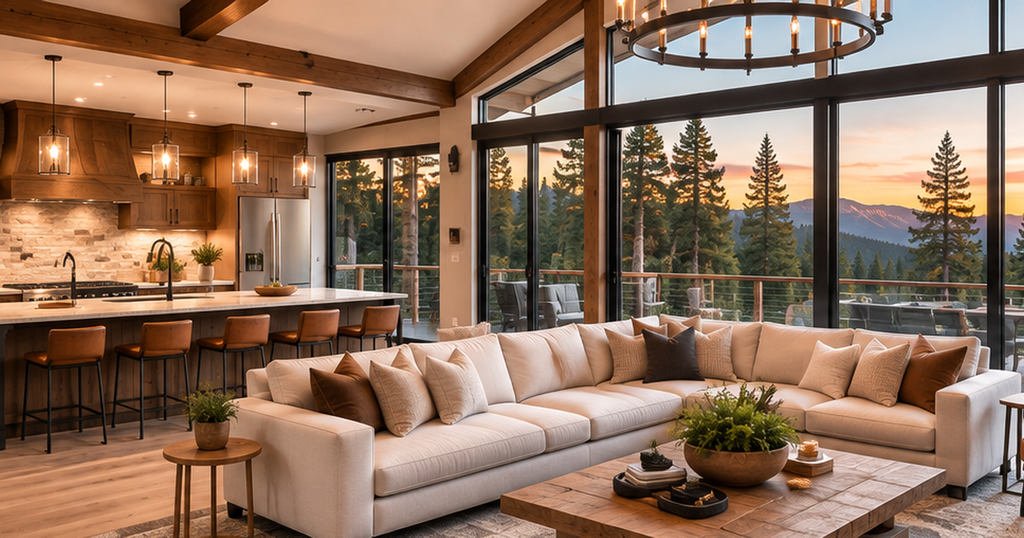
If you’re building on a property with mountain, valley, wooded, or other scenic views, consider those sightlines before the floor plan is finalized.
A thoughtfully positioned window can turn an everyday room into something extraordinary.
Natural light should also be considered throughout the day.
Think about where the sun rises and sets and how that affects rooms you use at different times.
Maybe you want morning light in the kitchen but prefer softer afternoon light in the primary bedroom. Perhaps large windows in the great room should frame the landscape instead of simply filling an exterior wall.
Custom construction gives you the opportunity to make those decisions intentionally.
5. Design Around Your Hobbies and Interests
One of the greatest benefits of building a custom home is creating space for the things you actually enjoy.
Instead of forcing your lifestyle into a standard floor plan, you can design spaces specifically around it.
That could include:
- A workshop
- Home gym
- Craft room
- Music room
- Library
- Theater
- Oversized garage
- Home office
- Outdoor kitchen
- Gear room
- Game room
These spaces are what can transform a beautiful house into a home that genuinely feels like yours.
6. Think About Indoor-Outdoor Living
Outdoor living areas can dramatically expand the way you use your home.
Covered decks, patios, outdoor kitchens, fireplaces, and large doors connecting interior and exterior spaces can make entertaining easier while helping the home feel connected to its surroundings.
When designing these spaces, consider how people will move between them.
For example, placing an outdoor entertaining area directly off the kitchen may make much more sense than requiring guests to walk through several rooms.
These relationships between spaces are easier to solve during planning than after construction begins.
7. Plan for How Your Life Might Change
You’re designing the home for today—but you may live there for decades.
Consider how your needs could change.
Will children eventually move out?
Could aging parents live with you?
Might you work from home in the future?
Would a main-level bedroom become valuable later?
Could a bonus room serve multiple purposes over time?
Flexible spaces can allow your home to adapt without requiring major renovations later.
Custom construction isn’t just about personalization. It’s also an opportunity to plan ahead.
8. Decide Where It’s Worth Investing More
Every custom home involves priorities.
Instead of trying to make every feature equally extravagant, determine which areas will have the greatest impact on your everyday life.
For one homeowner, that may be the kitchen.
For another, it could be an oversized garage, premium windows, structural upgrades, outdoor living, or an incredible primary suite.
One area where cutting corners rarely pays off is the structure itself.
Framing, foundations, structural components, weather protection, and other systems behind the finishes directly affect the home’s durability and performance.
Beautiful finishes can always be changed later.
The structure underneath them is much harder to change.
Build a Home Around You
The best custom homes don’t simply look impressive in photographs.
They work.
Rooms flow naturally. Storage is where you need it. Windows capture the right views. Gathering spaces bring people together. Private spaces provide somewhere to retreat.
Most importantly, the home reflects the people who live there.
At Johnson Revolution Construction, our custom home approach focuses on thoughtful planning, practical layouts, collaboration, and quality craftsmanship throughout the building process.
Your home shouldn’t force you to adapt to someone else’s floor plan.
It should be designed around you.
Ready to Start Planning Your Custom Home?
If you’re thinking about building a custom home, start the conversation early.
Johnson Revolution Construction can help you explore your ideas, evaluate what’s possible, and create a plan for turning your vision into a home designed for the way you want to live.