
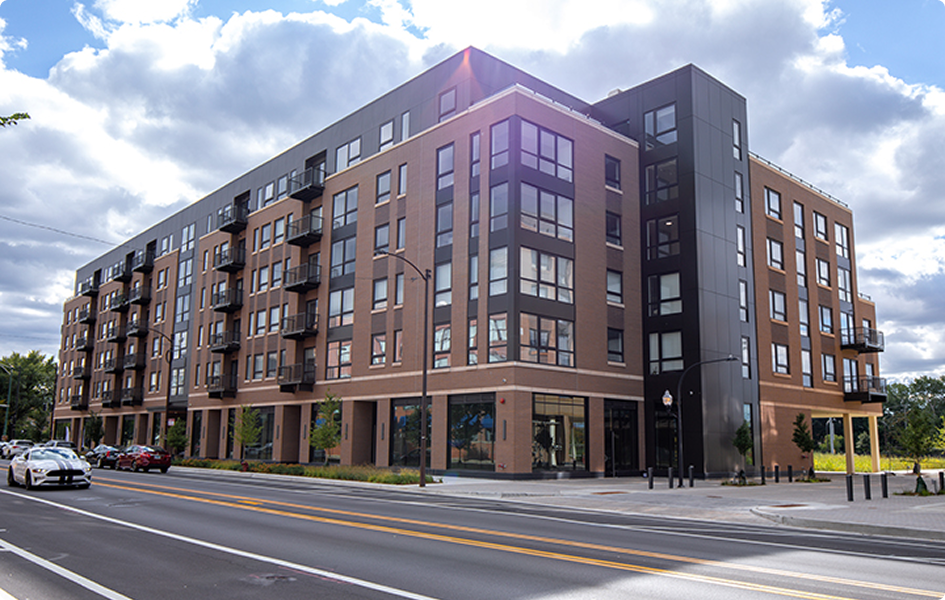
Built to Last: Key Structural Considerations for Commercial Buildings
Building a custom home is a deeply personal endeavor, but constructing a commercial building is an entirely different challenge. A commercial structure is more than just a place of business; it’s a long-term asset, a hub for employees and customers, and a physical representation of a brand. Its success is measured not only in aesthetics but in its durability, safety, and ability to adapt to the evolving needs of the business it houses. This requires a builder with a specialized skill set that goes far beyond residential construction.
At Johnson Revolution Construction, we bring our foundational commitment to quality and precision to the commercial sector. We understand that commercial buildings are subjected to immense stress, from heavy foot traffic and operational loads to the unforgiving forces of nature. That’s why our approach is centered on creating structures that are, above all, built to last. A deep understanding of key structural considerations is not just best practice—it’s essential for protecting your investment and ensuring the longevity of your facility.
The Foundation: More Than Just Concrete
The saying “built on a solid foundation” is a literal requirement in commercial construction. Unlike a single-family home, a commercial building often has a much larger footprint and supports significantly more weight. The design of its foundation is one of the most critical decisions in the entire project.
Soil Analysis and Geotechnical Engineering
Before any dirt is moved, a thorough geotechnical investigation is performed. This analysis tells us about the soil’s composition, density, and capacity to bear weight. Is the ground composed of stable bedrock, expansive clay, or loose sand? The answer dictates the type of foundation required. Ignoring this step is a recipe for disaster, potentially leading to catastrophic settling, cracking, and structural failure.
Foundation Types for Commercial Applications
- Shallow Foundations (Slab-on-Grade): Suitable for smaller commercial buildings on stable soil, a monolithic slab provides a solid, cost-effective base.
- Deep Foundations (Piers and Piles): For larger, multi-story buildings or sites with poor soil conditions, deep foundations are necessary. Drilled piers or driven piles transfer the building’s massive load down to more stable soil layers or bedrock, ensuring the structure remains stable for its entire lifespan.
At Johnson Revolution, we collaborate closely with geotechnical engineers to design and execute a foundation system that is precisely tailored to the site conditions and the building’s specific load requirements.
The Skeleton: Steel, Wood, and the Power of Hybrid Systems
The structural frame, or skeleton, is what gives a commercial building its shape and strength. The choice of materials and design has profound implications for the building’s layout, cost, and future flexibility.
The Strength of Steel Framing
Structural steel is the backbone of most modern commercial construction for good reason. It offers an exceptional strength-to-weight ratio, allowing for wide-open interior spaces with minimal need for support columns. This is crucial for creating flexible floor plans in retail stores, warehouses, and office buildings. Steel is also non-combustible, dimensionally stable, and resistant to pests and rot, making it a durable and low-maintenance choice. Our expertise includes integrating complex steel framing systems, ensuring every beam and column is precisely placed to create a robust and resilient structure.
Advanced Wood Framing and Mass Timber
While steel often dominates, advanced wood framing techniques and mass timber products like Glulam (glue-laminated timber) beams are gaining popularity. These materials can be used to create stunning architectural features and offer a warmer aesthetic than steel. Mass timber is also a sustainable choice, sequestering carbon and often requiring less energy to produce than steel or concrete. We have extensive experience crafting hybrid systems that leverage the strengths of both wood and steel, using each material where it performs best.
Load-Bearing Requirements and Structural Integrity
Commercial buildings must be designed to handle various types of loads:
- Dead Loads: The permanent weight of the building itself, including walls, floors, and the roof.
- Live Loads: The temporary weight of people, furniture, equipment, and inventory.
- Environmental Loads: The forces exerted by wind, snow, and seismic activity.
Our team works meticulously with structural engineers to calculate these loads and design a frame that can handle them with a significant margin of safety. This unwavering focus on structural integrity is what ensures the building is not just compliant with codes, but genuinely safe for its occupants.
Building for Flexibility: Creating Adaptive Spaces
The needs of a business can change dramatically over a decade. A building designed with no thought for the future can quickly become obsolete. A key structural consideration in modern commercial construction is designing for adaptability.
Open Floor Plans and Non-Load-Bearing Walls
By using steel or mass timber framing to create large, open spans, we can minimize the number of interior load-bearing walls. This allows the interior space to be easily reconfigured as the business evolves. A large open retail space can be divided into smaller offices, or an office layout can be opened up to create a collaborative workspace, all without compromising the building’s structural integrity.
Planning for Future Expansion
We also consider the potential for future growth. By designing the foundation and structural frame to support an additional story or a horizontal expansion, we provide our clients with valuable options. This foresight can save a business owner hundreds of thousands of dollars in the future, avoiding the need to relocate when they outgrow their space.
Adherence to Building Codes: The Bare Minimum
Building codes are not a target to aim for; they are the absolute minimum standard for safety. A truly professional builder views codes as the starting point, not the finish line. We pride ourselves on building structures that far exceed minimum requirements.
Navigating the complex web of commercial building codes, zoning laws, and accessibility standards requires deep experience. Our team manages this process proactively, ensuring that every aspect of the structure, from fire-rated walls to seismic bracing, is fully compliant and properly documented. This diligence protects our clients from costly delays and legal issues and results in a safer, more valuable asset.
The Johnson Revolution Commitment: Durability by Design
Constructing a commercial building is a massive undertaking and a significant financial investment. You need a partner who understands that shortcuts on structural components lead to long-term liabilities. At Johnson Revolution Construction, our reputation is built on the same principles as our buildings: strength, integrity, and an unwavering commitment to quality.
We lead with experience, applying our deep knowledge of commercial construction to every project. From the initial soil test to the final structural inspection, we ensure your building is engineered for durability, designed for adaptability, and built to last for generations.
Planning a commercial construction project?
Contact Johnson Revolution Construction today to discuss how our structural expertise can bring security and long-term value to your investment.