
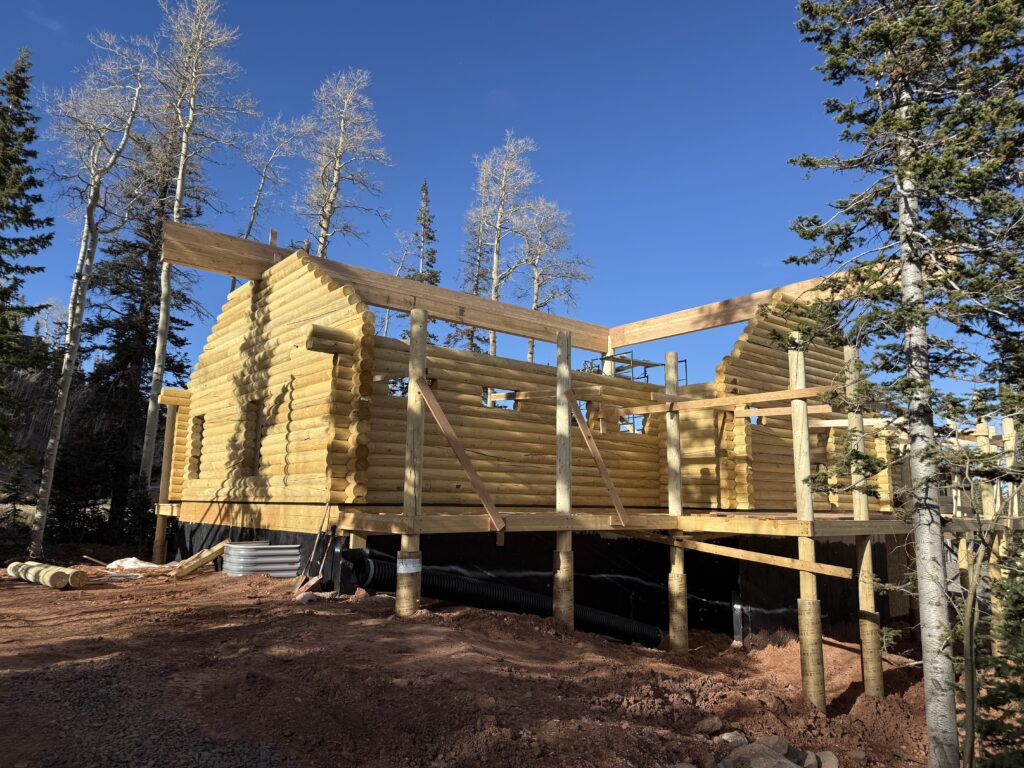
Log‑Home Durability: Craftsmanship That Lasts
When constructing a log home that will last the test of time, every detail matters. Picking your species of timber and being able to identify that the species is one of the foundational items that you must be able to do.
Brian has over 30 years identifying timber and knowing which species is the best to use as there are many factors to consider when choosing a species of timber. Trusting an expert that can not only provide with your timbers but also explain the differences and why you should use a specific type of timber is essential.
Log Craftsmanship is a dying skill, there are fewer and fewer experienced Log Crafters left. Brian has been Crafting Log homes for 30 years and his portfolio includes Log homes and structures all over the United States. Multi-Million dollar log homes to log gazebos, Johnson Revolution Construction will expertly craft whatever you can dream up.
A log home at first glance may seem to be a more expensive option, however log homes do not have the same expensive issues that standard homes have that are being built today.
Let’s take a look at the differences: Log homes are built from solid logs that do not require the installation of siding on the exterior of the home, insulation is also not required as logs are naturally insulated, painting is not required as the logs are stained and water resistant, and sheet rock is not required in log homes because the natural beauty of a log home is the log interior.
Homes built from high quality logs only require basic upkeep every few years (e.g staining the exterior of the logs).
In comparison to homes built today, the industry is using wood that has been harvested from genetically altered (e.g. hormones and cross breeding) trees that are designed to grow rapidly to produce more lumber faster. This commonly used lumber has growth rings up to and over a ¼ of an inch apart making the lumber weaker and more prone to twisting.
This is a detriment to the stability and structural capabilities of the lumber being produced. Old growth lumber (non-genetically grown trees, aged and matured naturally) have growth rings that are approximately 1/16 of an inch apart making the wood strong and hard.
The homes built with the fast growth lumber creates the all too common issue of settling in the home, which in turn creates a whole slue of issues such as cracks in sheet rock that has been installed on the interior. This issue then creates a need for a painter to be paid to come in and patch the cracks and repaint the interior, Settling can also create plumbing issues requiring the need for a certified plumber to come repair leaking pipes, drains that do not drain properly, cracked windows, doors coming out of square so they no longer open or close properly, squeaky floors etc. I can go on and on about the standard issues in modern home builds.
Here is some history to consider when deciding to build your log home: In the late 1800`s the second Industrial Revolution was beginning and the construction industry started to boom. Land developers, in a successful attempt to make construction faster, cheaper and with the use of less man power, had a huge explosion of metal hardware patents approved in a short period of time.
This era of building effectively began the decline of log crafters as it takes skilled workers more time to craft logs than it does to build homes using nail in hardware. Although the new age of home building had began, the new standard of building wasn’t driven by a better design or stronger structure that would last longer, it was driven by production and lower building cost to the builders.
Log home construction has stood through the tests of time as one of the most formidable building styles as it is a stronger structure, it uses fewer material types to build, it requires less regular maintenance and has an architectural look that can not be replicated with modern materials that don’t require significant maintenance. Last but above all, log homes were built since before the dawn of our country. The families that pioneered across the United States and explored our entire continent built log homes generation after generation. Through those generations the United States was built in to what it is today.
You can effectively say that log homes built America!